ServicesSecurity Window Film
Security Window Film in Galveston
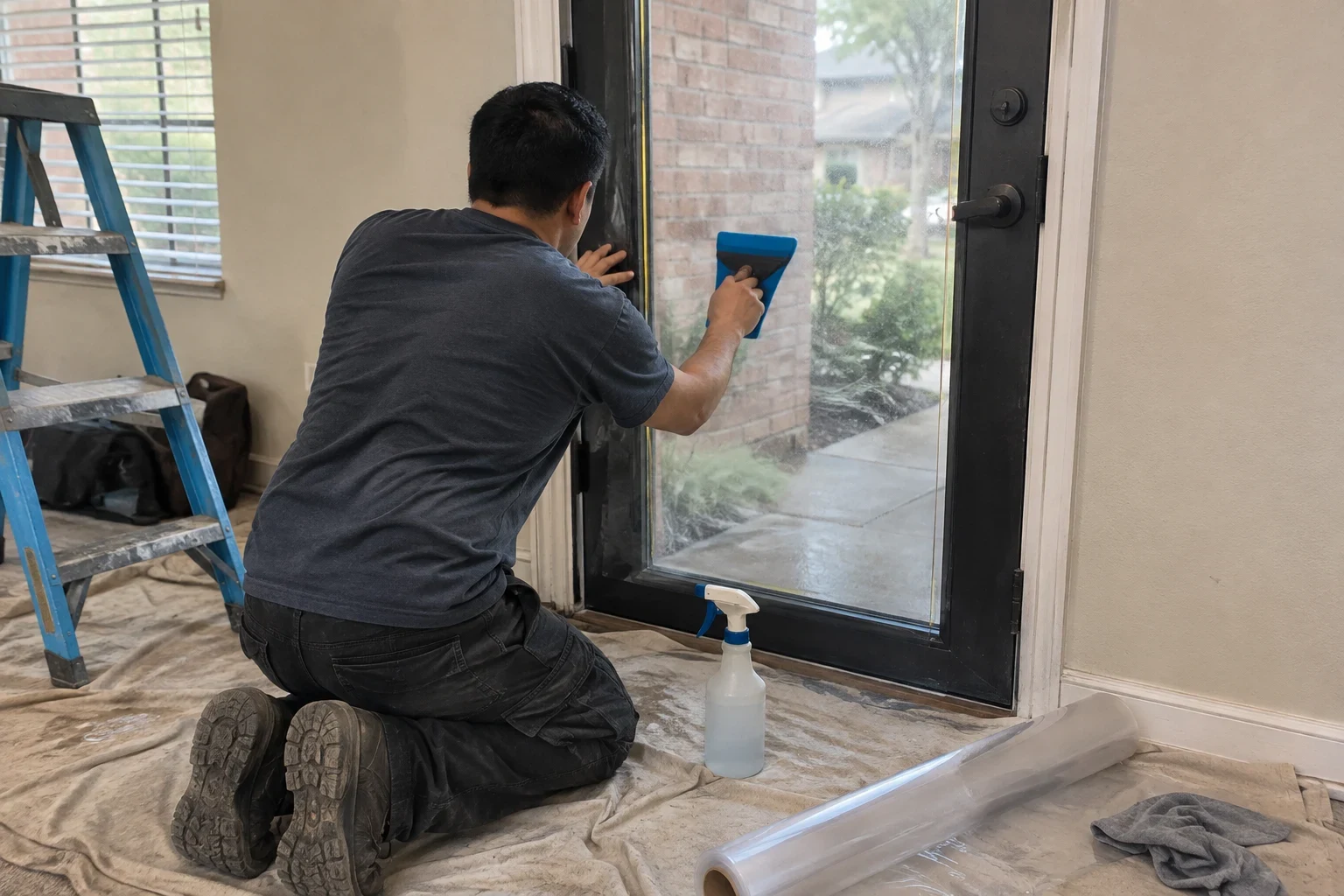
Security film is a thick, clear layer applied to the inside of your glass. When a pane breaks, the shards stay held by the film instead of flying into the room. We look at your glass and frames first, then tell you plainly what film will and won't do.
What Security Film Does, and What It Doesn't
Regular tint is thin. Security film is much thicker polyester with a strong adhesive. It doesn't make glass unbreakable. What it does is hold the broken pieces together, so a burglar has to keep hitting the same spot to get through, and a cracked window doesn't spray glass across the floor.
That extra time and noise is often enough to send someone away. It also cuts down on cuts and cleanup when a ball, a branch or wind-blown debris hits a pane.
We start every job by checking what kind of glass you have and how it sits in the frame. Older single-pane glass, tempered sliders and sealed double-pane units all behave differently with heavy film on them. You hear what we find before we suggest anything.
What Our Security Film Work Includes
A glass and frame inspection
We look for tempered stamps, failed seals, cracked glazing and loose frames. If a window has a problem film can't fix, we tell you.
The right film thickness
Thicker film holds up to more force but costs more. We match the thickness to the opening, so a ground-floor slider and a high bathroom window don't get the same thing by default.
Edge attachment where it counts
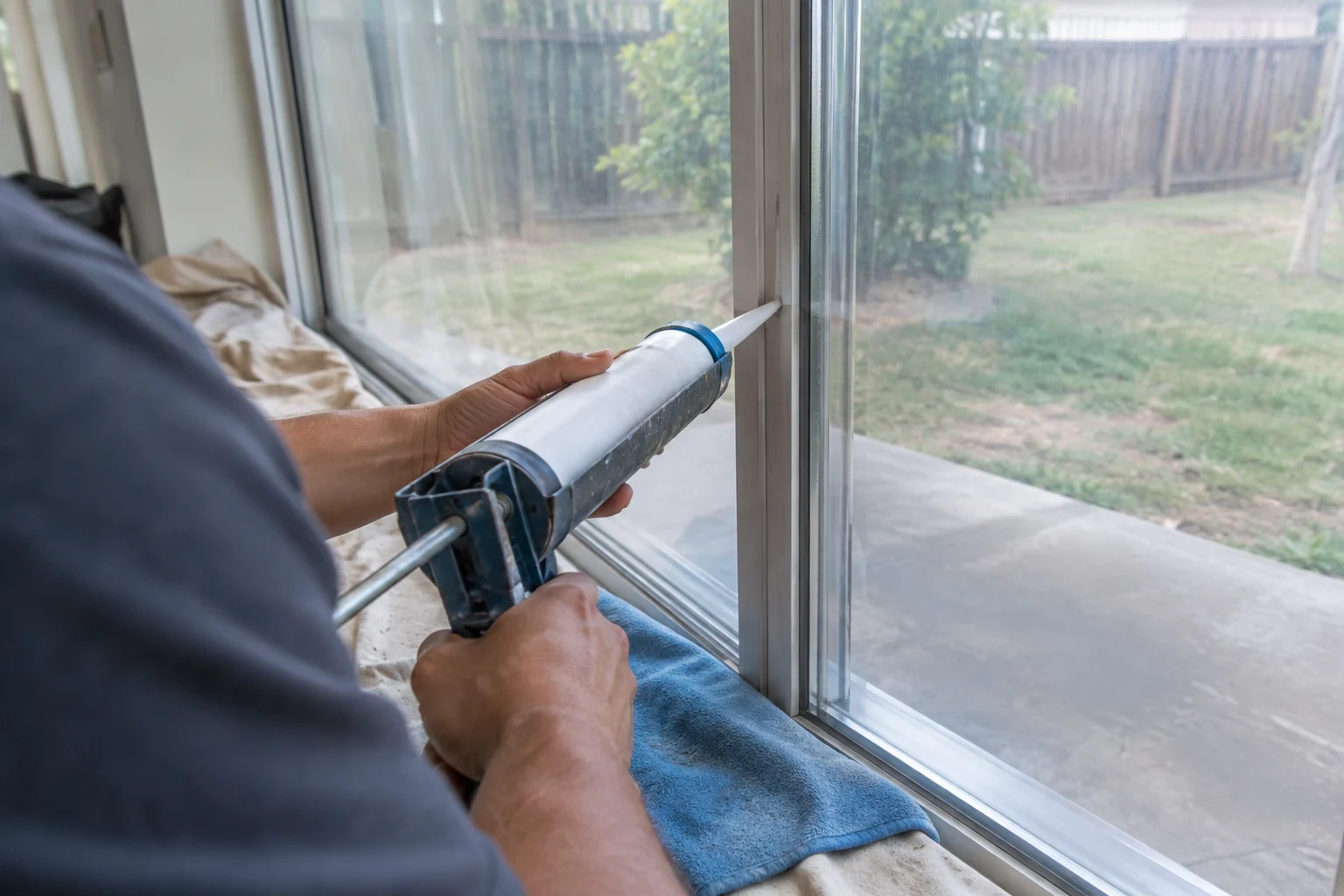
Film alone can let a whole broken sheet push out of the frame. On doors and easy-to-reach windows we can anchor the film edge to the frame with a structural sealant, which keeps the glass in the opening.
Clear or tinted options
Most security film is clear and hard to notice. If you also want heat rejection or UV protection, there are security films with a tint built in.
Careful install and cleanup
We protect sills and floors, clean each pane edge to edge, and take our scraps and drop cloths with us.
Signs Security Film Makes Sense for You
- Glass next to a door lock
- Sidelights and door glass let someone break a pane and reach the lock. Film makes that much harder.
- Sliding doors on the ground floor
- Big sliders are a common way in. They're often tempered glass, which shatters all at once, and film keeps those pieces together.
- A past break-in or attempt
- If someone has already tried a window, it makes sense to slow down the next try at that opening and the ones like it.
- Kids, pets or busy rooms
- In a playroom or near stairs, a broken pane held together by film is far less dangerous than loose shards.
- Worry about storm debris
- Film helps keep glass in place when something hits it. It is not a replacement for shutters or impact windows, and we'll say so.
How a Security Film Job Goes
- 1
Talk it through on the phone
Tell us which windows worry you and why. We set up a time to come look.
- 2
Inspect the glass and frames
We check glass type, seal condition and frame strength at each opening. Then we give you plain findings and a written estimate, window by window.
- 3
Install day
We clean each pane, cut the film to size and squeegee out the water and air. Where you chose edge attachment, we run the sealant bead and let it set. Most homes are done in a day.
- 4
Curing
The film can look a little hazy or show small water spots for a few weeks while it dries. Leave it alone and don't clean it for about a month, and it clears up.
What Moves the Price
Security film costs more than standard tint because the film is thicker and takes longer to fit. Your written estimate lists each window so you can see where the money goes and drop openings if you want.
- Film thickness
- Thicker film costs more per square foot and is harder to handle on big panes.
- Edge attachment
- Anchoring film to the frame adds material and labor, so we suggest it where it makes a real difference, like doors and ground-floor glass.
- Number and size of windows
- A few sidelights is a short job. A wall of sliders and picture windows is a bigger one.
- Access and old film
- High windows need ladders or extra setup. Old tint has to be stripped and the glass cleaned before new film goes on.
Security Film Questions
- Will security film stop someone from breaking in?
- No film makes glass impossible to get through. It holds the glass together so getting in takes longer and makes more noise. That delay is what discourages most break-ins. Pairing it with good locks and lighting works best.
- Does it help during a hurricane?
- It helps keep broken glass from flying into the room when debris hits a window. It does not make a window storm-rated, and it isn't a substitute for shutters, plywood or impact glass. We'd rather you know that up front.
- Can I put security film on double-pane windows?
- Usually yes, but heavy film can add heat stress to some sealed units, especially in strong sun. That's one reason we check each window first. If a pane is a poor fit for thick film, we tell you and suggest another option.
- Will I notice it on my windows?
- Clear security film is hard to spot once it cures. You may see a thin line at the edge, or a sealant bead if we anchored it to the frame. Tinted versions will look like regular window film.
- Is there a warranty?
- Yes. We give a lifetime warranty on home window tinting. On the call we'll walk you through how that applies to the security film going on your windows.
Find Out Which Windows Need It
We'll look at your doors and windows, tell you what we see and give you a free quote by phone. You decide from there.