ServicesHome Window Tinting
Home Window Tinting in Galveston
We put window film on the glass that's heating your rooms, fading your floors or putting glare on your TV. First we look at every window, tell you what we see and which film fits. Then you decide.
What home window tinting does for you
Window film is a thin layer we apply to the inside of your glass. The right film blocks a big share of the sun's heat and nearly all of its UV. Rooms stay cooler, the AC runs less and your furniture and floors stop fading.
Not every window needs the same film, and some windows need none. A dual-pane window with a failing seal, or glass that already has a low-E coating, can change what we'd put on it. That's why we start by checking the glass, not by pulling out a sample book.
Most of our home jobs are a few problem rooms: a west-facing living room, a bedroom that won't cool down, a sunroom you stopped using in summer. We'll tell you plainly which windows are worth doing and which ones aren't.
What the job includes
- 01
A window-by-window check
We note the glass type, whether it's single or dual pane, any coatings, the frame and seal condition and which way it faces. You get a plain rundown of what we found.
- 02
Film matched to the glass
Darker or more absorbent film can put extra heat stress on some dual-pane glass. We pick a film that's safe for each window, not one film for the whole house.
- 03
Samples on your own windows
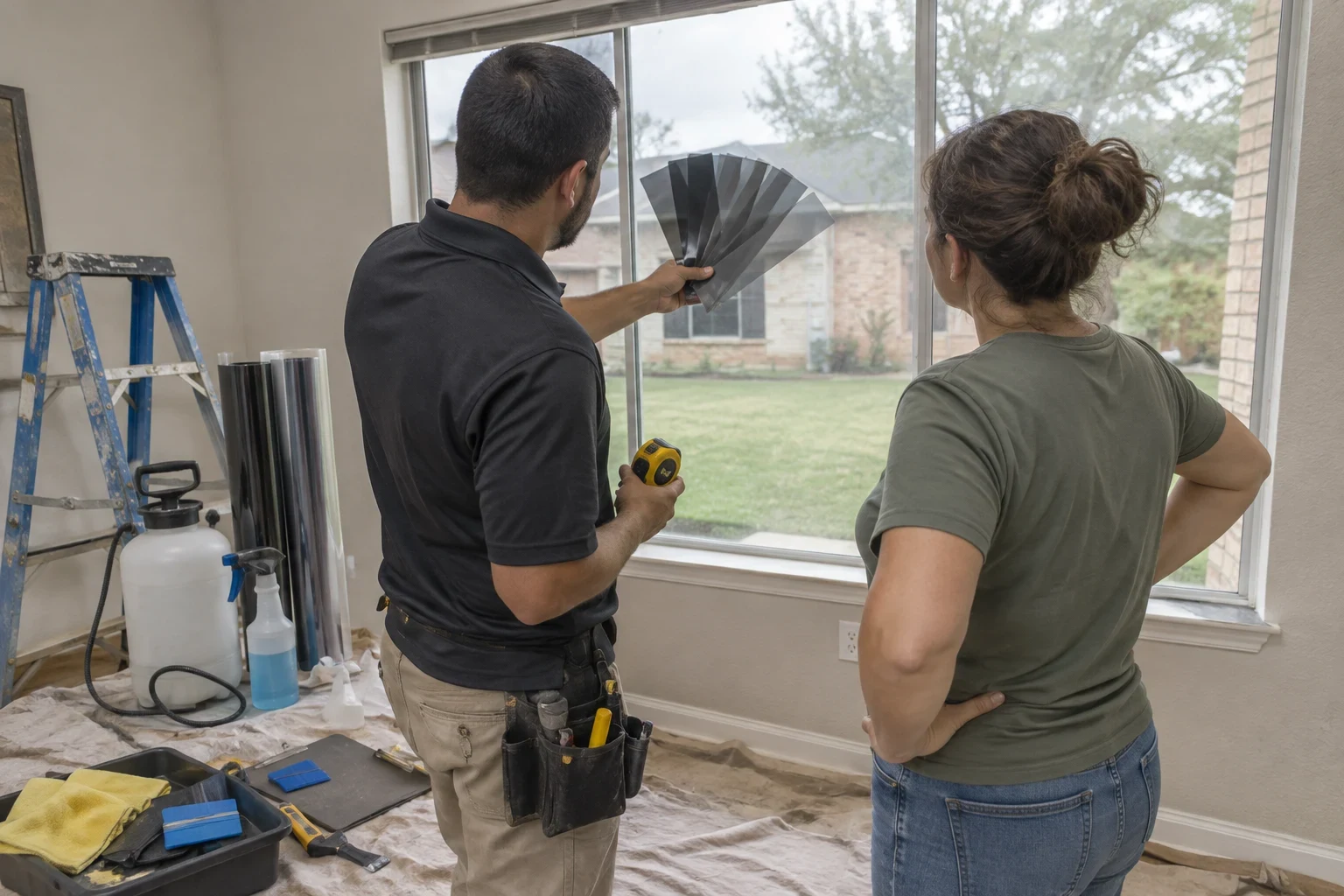
We hold film samples up to your glass so you can see the real tint level from inside and out. What you see in the room is what you get.
- 04
Clean, careful install
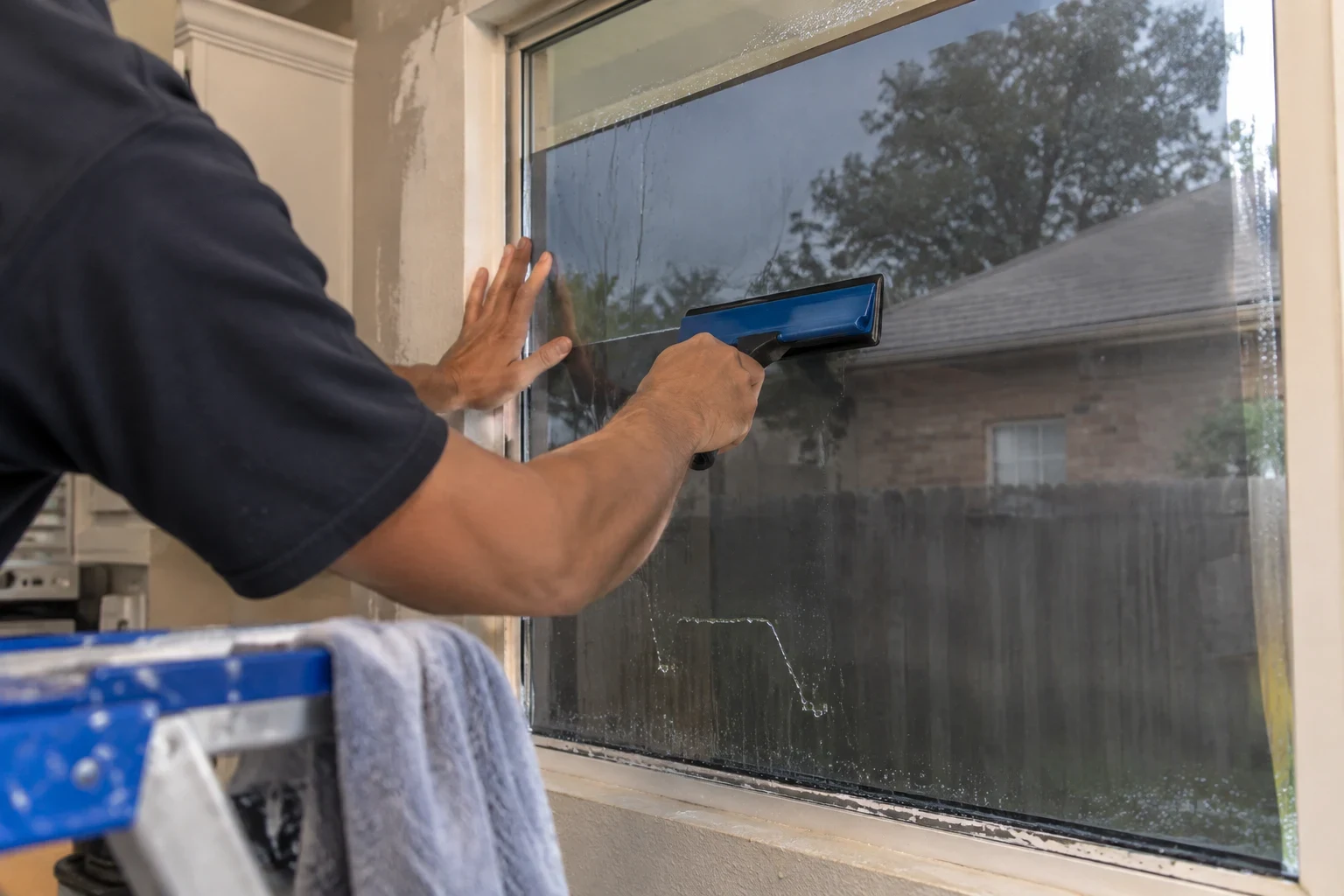
We protect sills and floors, clean the glass down to bare, cut the film to fit and squeegee out the water. Edges are trimmed tight to the frame.
- 05
Cleanup and care notes
We take our scraps and drop cloths with us. Before we leave, we go over how to clean filmed glass and what to expect while it cures.
- 06
A final walk-through
Before we pack up, we go window by window with you and look at the edges and the finish. If something doesn't look right, we fix it while we're still there.
Questions about Home Window Tinting?
Call(409) 509-6029Signs your home could use window film
One room is always hot
The thermostat says one thing and the back bedroom says another. Sun through the glass is often the reason.
Fading floors and furniture
Lighter patches on wood floors, rugs or couch cushions near a window point to UV damage. Film blocks most of it.
Glare on screens
If you close the blinds every afternoon to watch TV or work, film can cut the glare and let you keep the view.
High summer power bills
Gulf Coast sun hits hard for most of the year. When the AC never seems to catch up, the windows are a good place to look.
Neighbors can see in
Some films give daytime privacy without blocking light. For bathrooms and street-facing rooms, see our privacy window tinting page.
How a home tinting job goes
- 1
Phone call
You tell us which rooms bother you and why. We set a time to come out for the free consultation.
- 2
Inspection and findings
We look at each window and tell you what we see, including any glass we'd leave alone. You get our film suggestion and a written quote, room by room.
- 3
Install day
Most homes take a few hours to a day, depending on window count and access. We move what needs moving, protect the area and work room by room.
- 4
Curing
The film can look a bit hazy or show small water pockets for a few weeks while it dries. That's normal. Hold off on cleaning the glass until it clears.
What sets the price
We price after the inspection, not before, because the glass decides a lot. Your quote lists each room and window so you can see where the money goes. You can do the worst rooms now and the rest later.
- Number and size of windows
- More square feet of glass means more film and more labor. Large picture windows and sliders add up quickly.
- Type of film
- Ceramic film rejects a lot of heat without going dark and costs more than basic dyed or reflective film. We'll show you the tradeoff on your own glass.
- Access
- Tall windows, transoms and second-story glass may need ladders or extra time. Windows blocked by built-ins take longer too.
- Old film removal
- Bubbled or peeling film has to come off and the adhesive cleaned before new film goes on. That adds time.
Questions about home window tinting
Will window film make my house dark?
Not unless you want it to. Many films block a lot of heat while staying light, especially ceramic film. We put samples on your glass so you can judge before you choose.
Can you put film on dual-pane windows?
Usually, yes. Some films are too absorbent for certain dual-pane or low-E glass and can add heat stress. Checking that is part of our inspection, and we'll only suggest a film that suits the glass.
Is there a warranty?
Yes. We offer a lifetime warranty on home window tinting. We'll walk you through what it covers when we give you the quote.
Do I need to be home during the install?
Someone needs to let us in and show us around. After that, you can go about your day while we work room by room.
Can I still open and clean my windows?
Yes. The film goes on the inside of the glass, so windows open and close as before. Once it's cured, clean it with a soft cloth and a mild, ammonia-free cleaner.
Let's look at your windows first
We'll come out, check the glass and tell you what we'd do and what we wouldn't. The consultation is free, and there's no pressure to go ahead.