ServicesNon-Reflective Window Film
Non-Reflective Window Film in Galveston
You want a cooler room and less glare, but you don't want windows that look like mirrors. Non-reflective window film does the work quietly. We look at your glass first, tell you what we find, and only then suggest a film.
Heat and Glare Control Without the Mirror Look
Non-reflective film is a low-reflection window film. From the street, your windows look close to how they look now. From inside, you keep a clear view out, and at night you don't stare at your own reflection when the lights are on.
Older mirror-style films block heat by bouncing sunlight back out. Non-reflective films mostly absorb or filter it instead, using ceramic or carbon layers. That means good heat rejection and UV protection with a look most neighbors won't notice.
It is the right call when you care about how the house looks, want to keep a water or yard view, or live under HOA rules about shiny glass. If you need maximum daytime privacy, our privacy window tinting or reflective window film may fit better, and we will say so.
What the Job Includes
A window-by-window inspection
We check each pane before we talk film. We look for failed seals, fogging between panes, chips, and existing low-E coatings. We tell you plainly what we see.
Glass and film matching
Absorbing films make glass run warmer. On some double-pane or large annealed windows that adds stress, so we match the film to the glass. If a window should not get film, we leave it alone and tell you why.
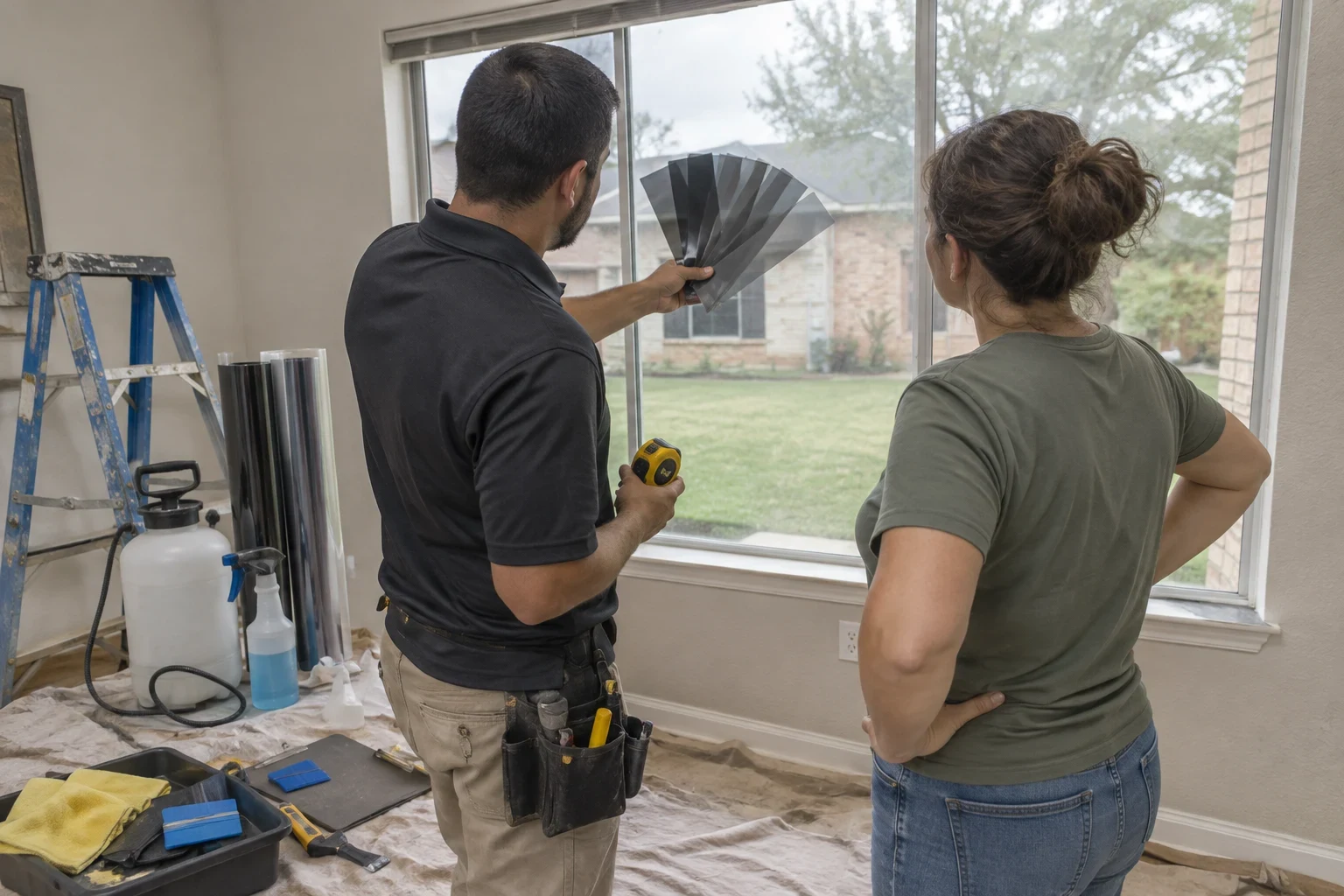
Samples on your own windows
We hold film samples up to your actual glass so you can see the shade and clarity in your own light. Pictures online don't show this well.
Careful prep and install
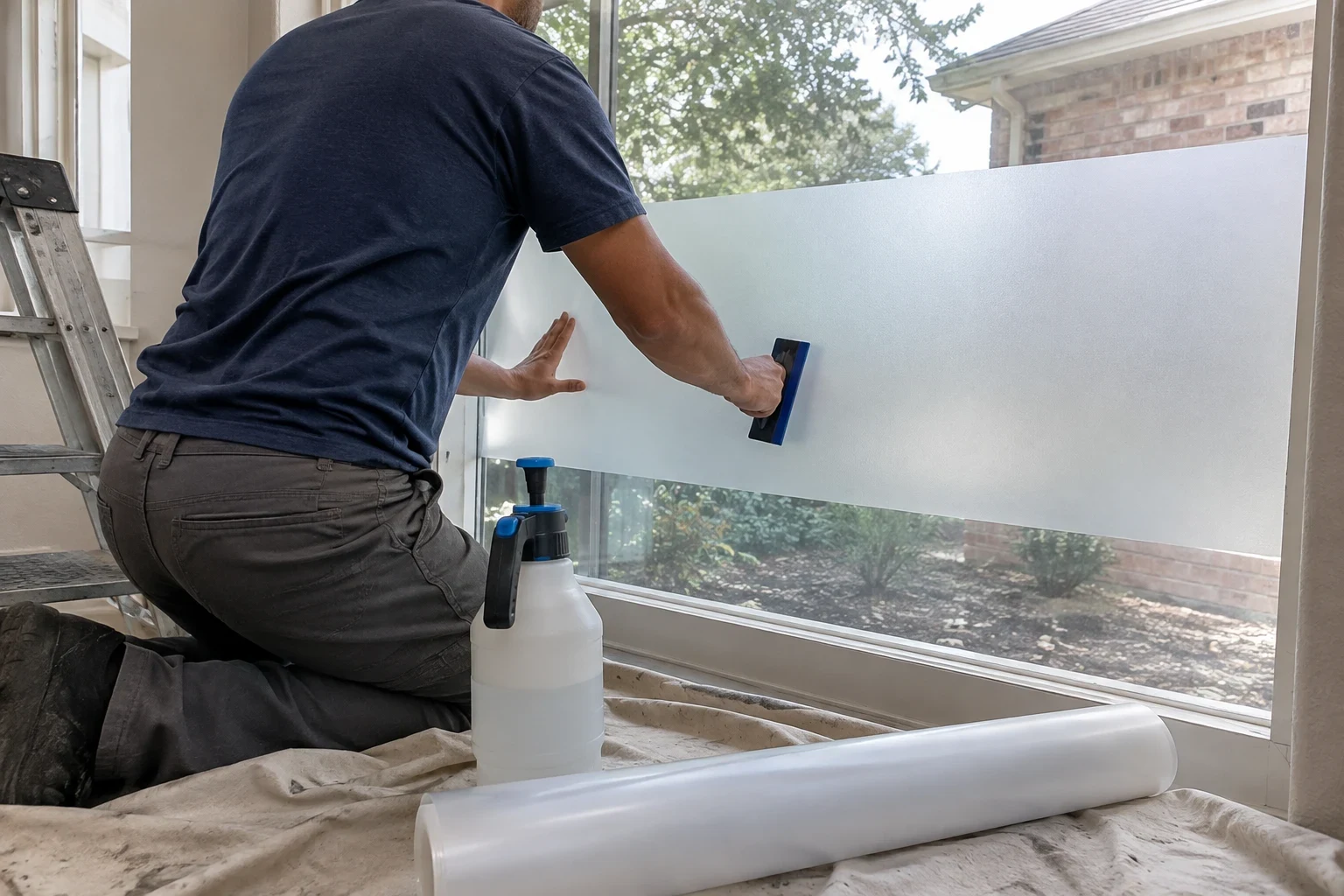
We clean the glass, scrape off old residue, and protect sills and floors. Film is cut to fit with a small, even gap at the edges.
Cleanup and care notes
We wipe down, haul off scraps, and leave you simple instructions for the curing period and cleaning.
Signs Non-Reflective Film Is a Good Fit
- Rooms that bake in the afternoon
- One side of the house gets hot every day and the AC can't keep up. Film can cut the heat coming through that glass.
- Glare on screens and TVs
- You close the blinds to watch TV or work. Film knocks down glare so the blinds can stay open.
- Fading floors and furniture
- Rugs, wood floors and fabric are losing color near the windows. UV protection slows that down a lot.
- You like your view
- In a coastal town like Galveston, a lot of people bought the house for the view. Non-reflective film keeps it clear instead of tinted gray or mirrored.
- HOA or look concerns
- Your HOA frowns on shiny windows, or you just don't want the house to look different. Low-reflection film is the safer choice.
How Your Install Day Goes
- 1
Phone call and visit
You call, we set a time, and we come out to look at the windows. The consultation is free.
- 2
Plain findings and options
We walk you through what we found, which windows make sense, and which film we'd use. You get a written quote with each window listed.
- 3
Prep the rooms
On install day we move what needs moving, lay down covers, and clean every pane well. Dust under film is what you'd see later, so we take our time here.
- 4
Apply and squeegee
Film goes on wet, gets positioned, and is pressed out edge to edge. Most homes are done in a day.
- 5
Walk-through
We look at each window with you before we leave. Some haze or small water spots are normal for a few weeks while the film cures.
What Moves the Price
We price per job after we see the windows, not from a chart. A few things drive the number up or down. You get the breakdown in writing before any work starts, so nothing shows up later.
- Total glass area
- More square feet of glass means more film and more labor. A couple of west windows costs far less than a whole house.
- Film type
- Ceramic film usually costs more than carbon or dyed film. It also tends to reject more heat while staying clearer.
- Access and window size
- Tall windows, transoms and big picture glass need ladders, extra hands, or seamed film. That adds time.
- Old film removal
- Peeling or bubbled film has to come off and the glue has to be scraped clean. That step can take as long as the new install.
Questions About Non-Reflective Film
- Will people be able to tell my windows have film?
- Most won't. Non-reflective film keeps outside reflection close to plain glass. Darker shades show a little more, and we show you samples on your own windows so you can decide.
- Does non-reflective film block as much heat as mirror film?
- Good ceramic film comes close, and for most homes the difference is small. Highly reflective film still rejects the most heat. If heat is your only goal, we'll tell you that during the visit.
- Can it go on double-pane or low-E windows?
- Often yes, but not always. Some glass gets too much heat stress with certain films. That's why we inspect first and pick a film rated for your glass, or skip that window.
- Does it give me privacy?
- Some daytime privacy with darker shades, but not much. At night, with lights on inside, people can see in. If privacy is the main need, look at our privacy window tinting or decorative window tinting.
- Is there a warranty?
- Yes. We offer a lifetime warranty on home window tinting, and that covers non-reflective film installed in your home. We go over what it covers when we give you the quote.
Keep Your View and Lose the Glare
We'll come look at your windows, tell you what we see, and give you a written quote. The consultation costs nothing.