ServicesReflective Window Film
Reflective Window Film in Galveston
Reflective film puts a thin metal layer on your glass that sends a large share of the sun's heat back outside. It cuts hard glare and gives daytime privacy. We look at your windows first and tell you straight whether it is the right film.
What Reflective Film Does and When It Makes Sense
Reflective window film has a metallized layer that works like a mirror. Sunlight hits it and much of the heat bounces off before it reaches the room. It is one of the strongest options for heat rejection and glare reduction, and it blocks most UV, which slows fading on floors and furniture.
It is not right for every window. From outside, the glass looks silver or bronze during the day. At night, with lights on inside, the effect flips and people can see in. Some double-pane glass can take on too much heat with a dark reflective film, and some neighborhoods limit mirror finishes. That is why we check the glass before we suggest anything.
If the look is a problem, ceramic film or non-reflective window film can get you strong heat control without the shine. We will say so if one of those fits better.
What the Job Includes
Glass check before any recommendation
We look at each window for glass type, seal condition and sun exposure. If a dual-pane unit has a failed seal or the glass is a type that risks heat stress, we tell you and show you what we found.
Film shade and finish options
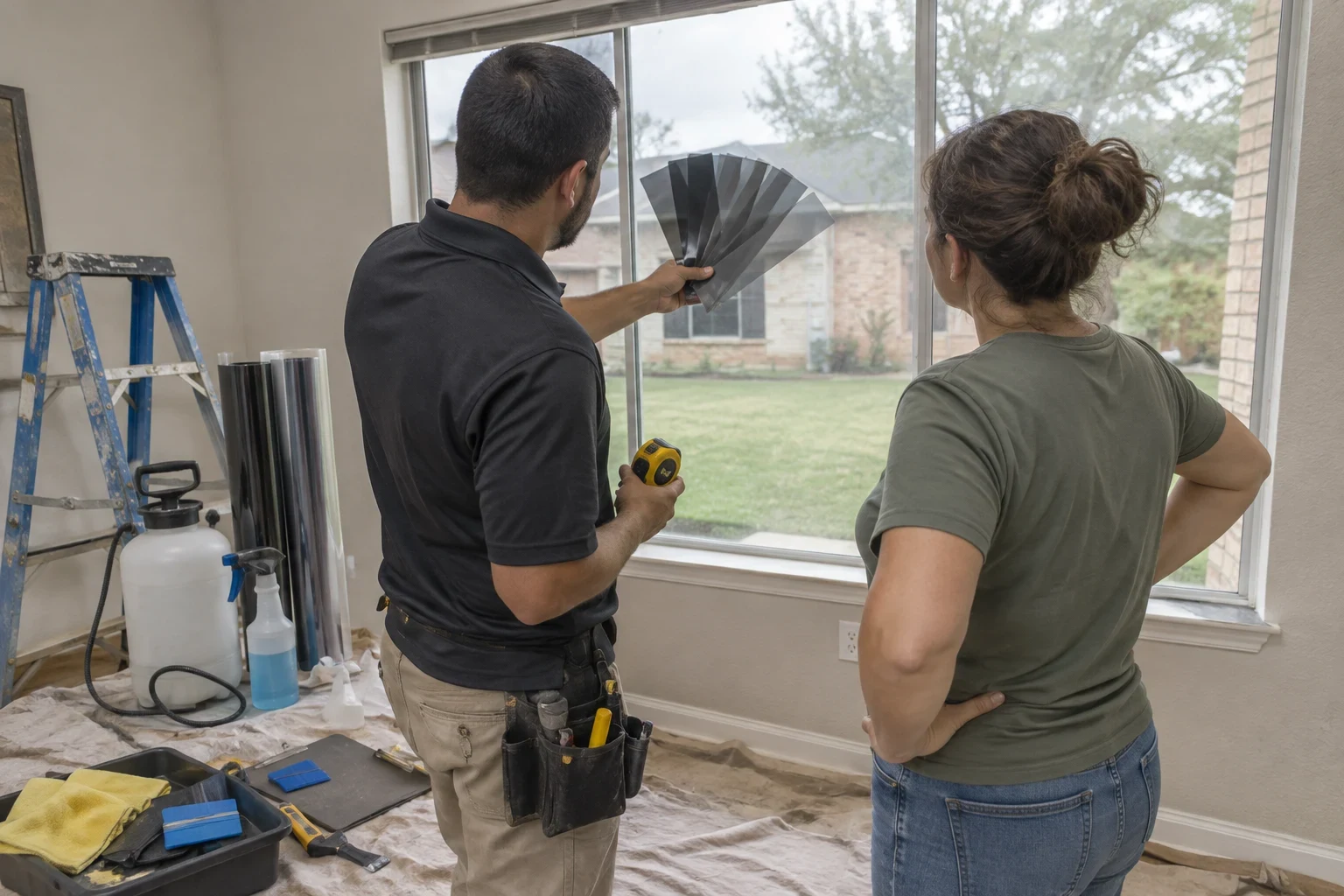
Reflective films come in different darkness levels and colors, like silver, bronze and smoke. We bring samples so you can hold them up to your own windows and see the outside look and inside view.
Written quote, window by window
You get a quote that lists each window, the film and the price for that line. Nothing gets added on the day without your say.
Careful prep and clean install
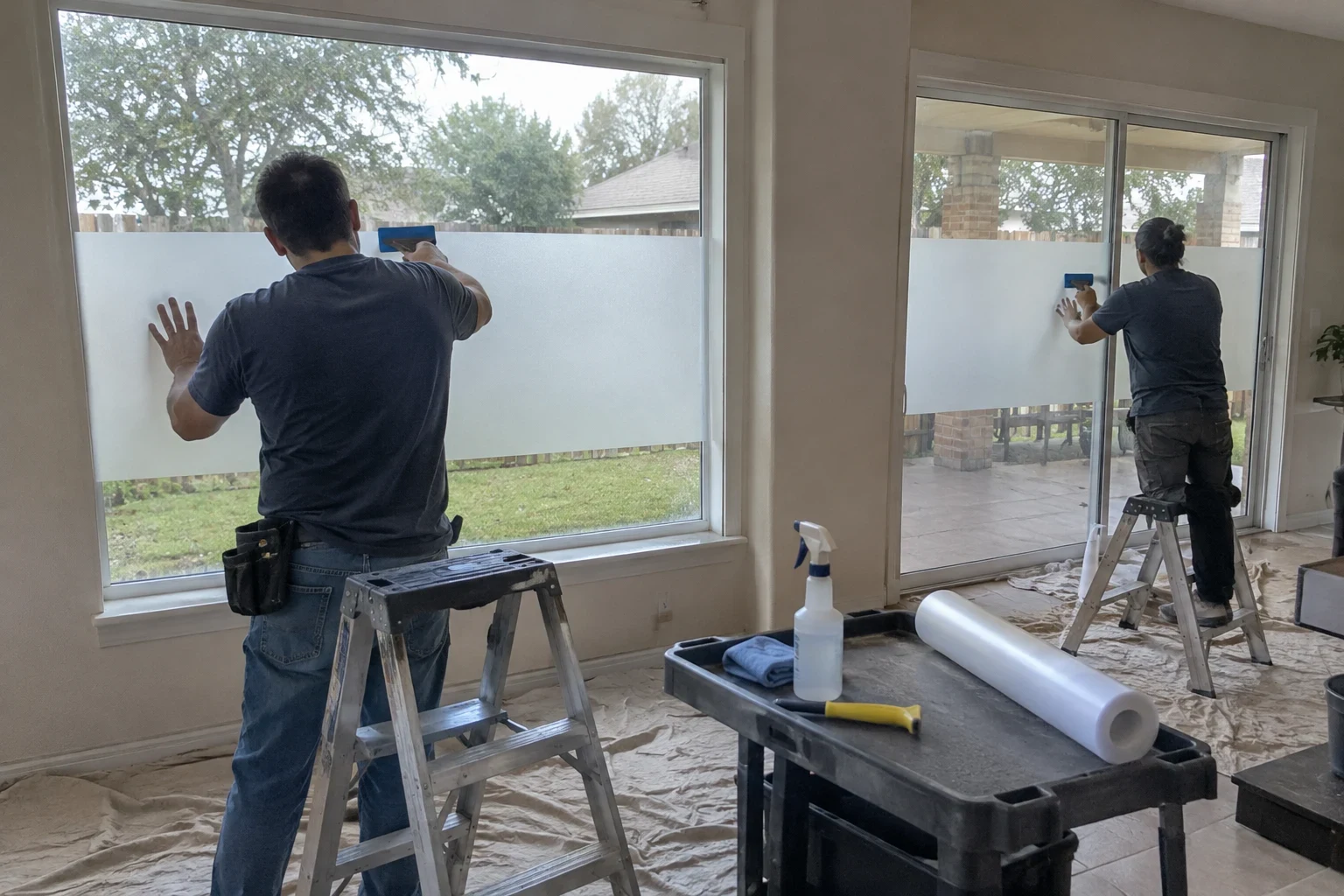
We protect sills and floors, clean the glass and scrape off grit, then cut the film to fit with a small edge gap. The edges get sealed tight, which matters for metal film near salt air.
Cleanup and care walk-through
We wipe down, haul off scraps and show you how to clean the film without scratching it.
Signs Reflective Film Could Help
- A room you avoid in the afternoon
- West and south rooms that turn hot after lunch are the classic case. Reflective film does its best work on glass that takes direct sun for hours.
- Glare on screens and the TV
- If you close the blinds every day just to see a screen, a reflective film can cut that glare and let you keep the view.
- Faded rugs, floors or furniture
- Bleached spots near windows mean UV is getting through. The film blocks most of it.
- The AC runs hard and still loses
- When one side of the house stays warm no matter the thermostat, heat through the glass is often the cause. Less heat in can mean energy savings over a long summer.
- You want daytime privacy without curtains
- The mirror effect keeps people from seeing in during the day. For privacy at night too, look at privacy window tinting or blinds.
How the Work Goes
- 1
Phone call
You tell us which rooms bother you and when. We set a time to come look.
- 2
Inspection and plain findings
We check the glass, frames and seals, note sun direction and measure. You hear what we found, good or bad, before we talk film.
- 3
Recommendation and quote
If reflective film fits, we show samples and give a written quote. If another film fits better, we tell you that instead.
- 4
Install day
Most homes take a few hours to a day. We work inside, keep the area covered and clean up when done. The film can look hazy or show small water spots for a few days while it cures, and that clears on its own.
What Moves the Price
Every quote depends on your windows, so we price after we see them. The free consultation gives you a real number, not a guess. These are the things that change it.
- Number and size of windows
- Total square footage of glass is the biggest factor. Large sliders and picture windows take more film and more time.
- Film grade
- Reflective films vary in how much heat they reject and how long the metal layer holds up. Higher-grade film costs more and lasts longer.
- Access and height
- Tall stairwell windows or glass behind built-ins need ladders or extra setup.
- Old film removal
- Peeling or purple film has to come off first. Scraping off old adhesive adds labor.
Reflective Film Questions
- Will people see into my house at night?
- Yes, once it is dark outside and your lights are on. The mirror effect only works when it is brighter outside than inside. If night privacy matters, pair the film with blinds or ask about privacy film.
- Can reflective film crack my windows?
- It can on some glass if the film absorbs too much heat, mostly older dual-pane units or certain coated glass. That is a big reason we inspect first. If your glass is at risk, we will steer you to a safer film.
- Does the salt air hurt metal film?
- Metal layers can corrode if moisture gets in at the edges, and that is a real concern on the coast. We seal edges carefully and pick films made to hold up. Since the film goes on the inside of the glass, it is not facing the weather directly.
- Will it make my rooms dark?
- Some shades do, some barely change the light. We show samples on your own glass so you can judge before you decide.
- Is there a warranty?
- Yes. Our home window tinting comes with a lifetime warranty. We go over what that covers when we give your quote.
- Can it affect my phone signal?
- Metal films can weaken cell signal a little in some rooms. If that worries you, ceramic film gives strong heat rejection with no metal.
Let Us Take a Look at Your Glass
We will check your windows, tell you what we see and give you a straight answer on reflective film. We work in Galveston and nearby towns like Texas City, League City and Dickinson.